

Different Types of Sewing Stitches
Sewing stitches are methods for joining or decorating fabric. Key types include running, backstitch, basting, overcast, lockstitch, zigzag, stretch, blind hem, and decorative stitches such as satin, chain, cross, French knot, buttonhole, hemstitch, and feather stitch. Each has a specific purpose: strength, flexibility, or decoration.
Choosing the wrong stitch can cause puckered seams, frayed edges, or uneven hems, turning a sewing project into a source of frustration for both beginners and experienced sewists. However, this can be avoided. Knowing which stitch to use saves time, improves results, and helps projects look professional. Selecting the right technique ensures polished outcomes.
Basic Sewing Stitches
Here are the basics of sewing stitches:
Running Stitch
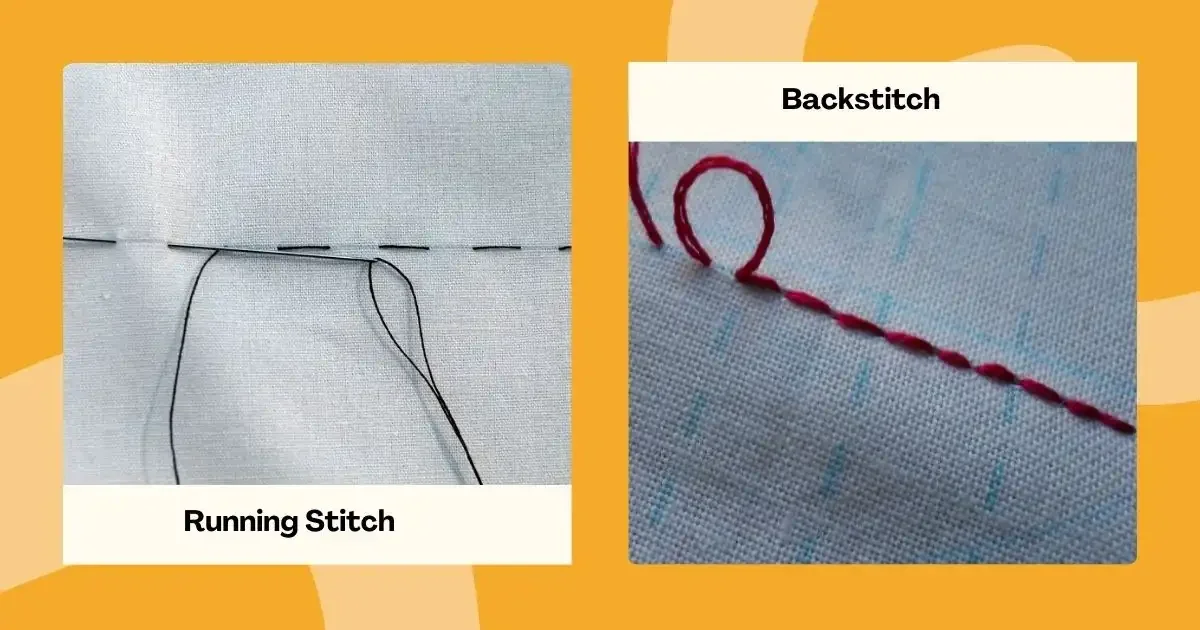
The running stitch is the foundation of hand sewing, consisting of small, evenly spaced stitches along a straight line. Despite its simplicity, it’s highly versatile and widely used for temporary seams, quilting, gathering fabric, and light repairs. To achieve the best results, keep stitches uniform for a neat finish, use it for basting or whenever a temporary stitch is needed, and it’s ideal for beginners learning to control stitch length and spacing.
Backstitch
The backstitch is stronger than a running stitch because each stitch overlaps slightly, creating a continuous, secure seam. It is perfect for seam repair, patching, hand-sewn clothing, and embroidery outlines. For durability, pull the thread tight but not so tight that the fabric puckers, and use basting stitches when aligning pieces for extra security.
These stitches become much easier with practice—our favourite beginner sewing tips can help you avoid common mistakes and improve stitch quality.
Basting Stitch
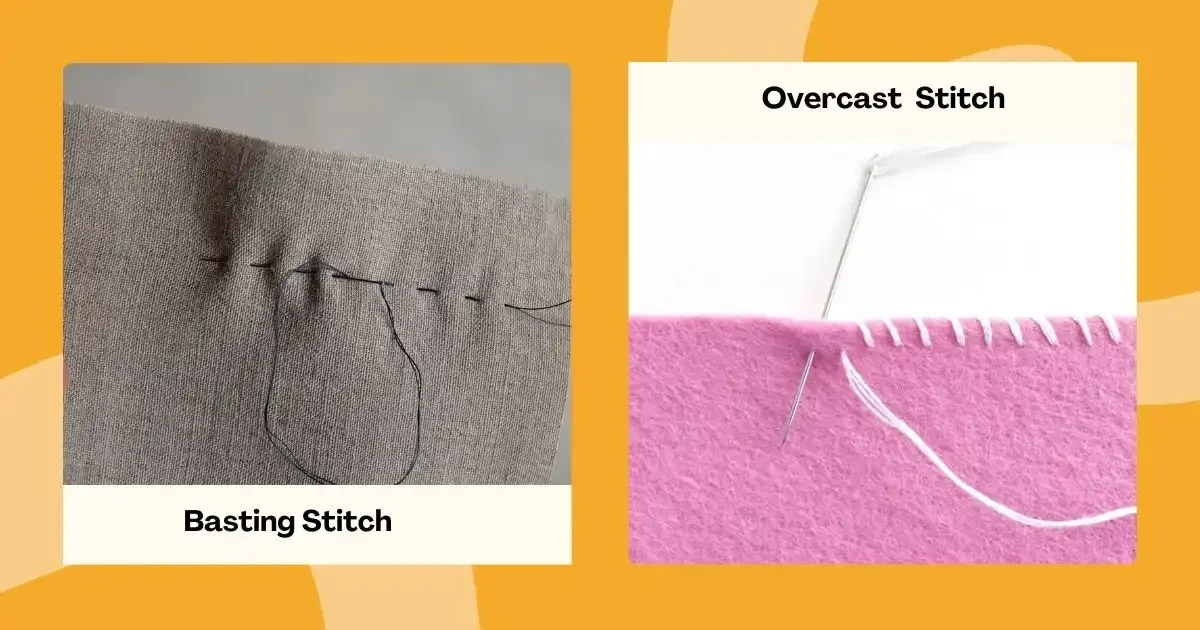
Basting stitches are long, temporary stitches used to hold fabric together before permanent sewing. They are quick to make, easy to remove, and perfect for checking garment fit or securing layers in quilting projects. Using a contrasting thread makes removal easy, and basting can be done by hand or machine, helping keep fabric aligned before final stitching.
Overcast Stitch
Overcast stitches wrap around raw fabric edges to prevent fraying, creating a neat and durable finish. They are ideal for seam finishes and hand-rolled hems. To achieve a professional look, keep stitches evenly spaced, adjust stitch spacing for thick or delicate fabrics, and combine with a backstitch when extra durability is needed. For hands-on guidance, book now at our Sewing Workshops.
If you’re new to stitching, our complete sewing for beginners guide explains essential tools, techniques, and confidence-building tips before you start practising different stitches.
Types of Sewing Machine Stitches
Here are the different stitches on a sewing machine:
Lockstitch

The lockstitch, created by most sewing machines, occurs when the needle thread interlocks with the bobbin thread inside the fabric. It is strong, versatile, and widely used for everyday garment construction, home décor, and quilting. To prevent puckering and ensure durable seams, adjust the tension and the stitch length based on the fabric being used. Before trying any machine stitches, it’s important to understand how to thread a sewing machine correctly to ensure neat and even results.
Zigzag Stitch
Zigzag stitches are flexible and ideal for stretch fabrics, seam finishing, and decorative purposes. Their side-to-side pattern prevents fraying while allowing elasticity. Adjust the width and length to suit your project, and use zigzag stitching to repair torn seams in stretch garments or add decorative embroidery accents.
Stretch Stitch

Stretch stitches are designed specifically for fabrics that stretch, such as jersey or knits. They maintain seam elasticity, making them perfect for sportswear and activewear. Test the stitch on scrap fabric first to ensure proper tension and performance, and use it wherever seams are likely to stretch frequently. Stitch results can vary depending on material, so adjusting your sewing machine settings for different fabrics will help you achieve professional-looking stitches.
Blind Hem Stitch
The blind hem stitch creates nearly invisible hems, providing a professional finish for garments and drapery. It tucks the raw edge under the fabric and is commonly used for skirts, trousers, curtains, and formal wear. Proper alignment and the use of a blind hem foot can help keep stitches hidden, and practising on scrap fabric first is recommended for best results. Join our Monday Evening Sewing Class to learn these techniques in a friendly, guided environment with step-by-step instruction and expert tips.
Decorative and Embroidery Stitches
Here are the types of embroidery stitches:
Satin Stitch
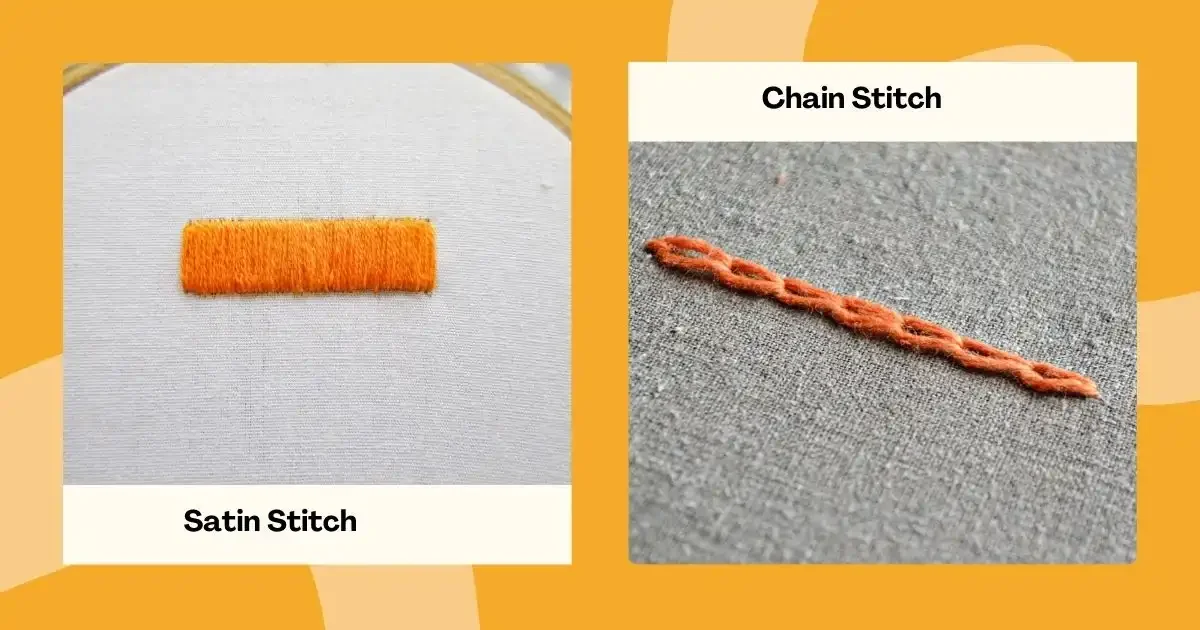
Satin stitch is dense, smooth, and perfect for embroidery and appliqué projects. It covers fabric completely with a solid block of thread and is commonly used for monograms, decorative patches, and embellishments. Keeping stitches close together and using a stabiliser for delicate fabrics ensures a polished, shiny finish.
Chain Stitch
The chain stitch forms loops that resemble a chain, often used in decorative embroidery. It’s ideal for borders, outlining shapes, and traditional embellishments. Maintaining even tension prevents loose loops, and chain stitch can be done by hand or machine to add elegant details to fabric.
Cross Stitch

Cross stitch is a popular embroidery technique that forms X-shaped patterns on even-weave fabric. It’s commonly used for samplers, wall art, and home décor projects. Counting threads carefully helps maintain uniform Xs, and it works best on Aida cloth or similar fabrics, often combined with backstitching for outlines.
French Knot
The French knot adds small, raised dots to embroidery for texture and dimension. It’s perfect for flower centres, eyes in characters, or decorative accents. Practice is key to consistent knot size, and maintaining even tension prevents knots from being too loose or too tight, making it a versatile stitch for detail work. Learn these techniques in our Tuesday Evening Sewing Class, where guided instruction and expert tips help you master intricate embroidery stitches in a supportive, creative environment."
Specialty Stitches
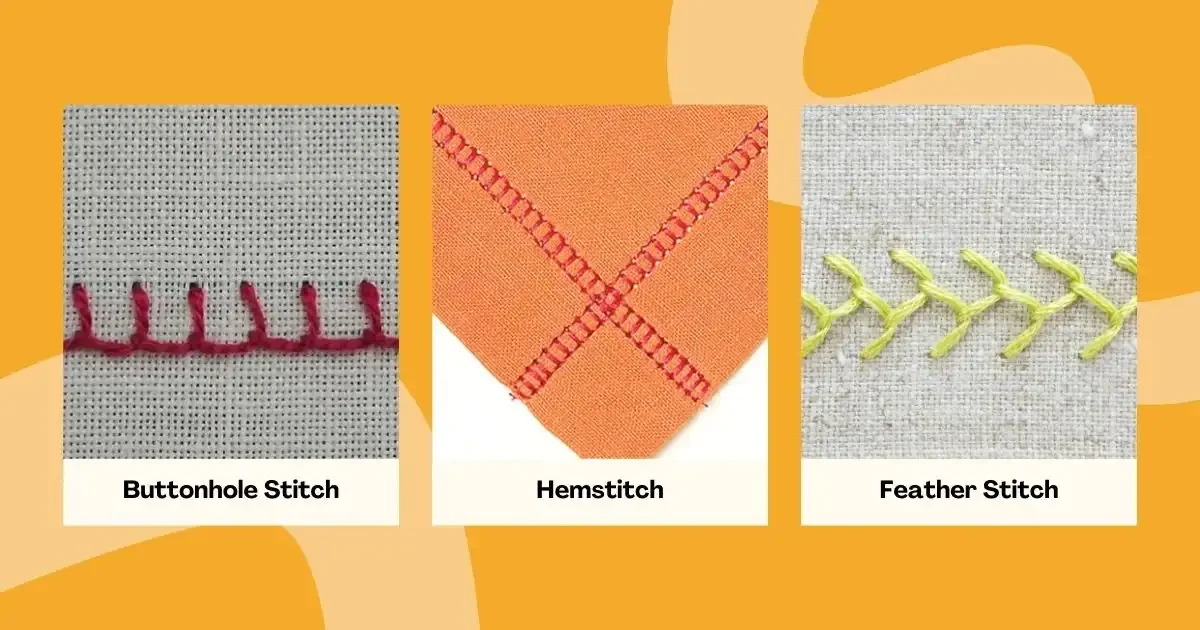
Here are some specialty stitches:
Buttonhole Stitch
Buttonhole stitch secures and reinforces the edges of buttonholes, preventing fraying and creating a polished finish. It is commonly used in garments, bags, and closures. Using a stabiliser and small, tight stitches ensures crisp edges, and machine-made buttonholes can speed up the process while maintaining precision.
Hemstitch
Hemstitching is decorative and functional, often creating openwork along hems and edges. It works beautifully on table linens, curtains, heirloom garments, and other decorative projects. Precision and patience are required, and combining hemstitch with embroidery can enhance the elegance of lightweight fabrics like linen and cotton.
Feather Stitch
Feather stitch is an open, decorative stitch often used along edges or seams to create artistic patterns. It’s perfect for borders, heirloom sewing, and embellishments. Keeping spacing consistent and practising the pattern ensures symmetry, and combining the feather stitch with beads or thread variations can add creative flair. Learn these techniques in our Wednesday Daytime Sewing Class, where expert guidance and step-by-step instruction help you bring creativity and precision to every stitch.
Tips for Choosing the Right Stitch
Consider the fabric type: Heavy fabrics require strong stitches, such as backstitch or lockstitch, while lightweight fabrics work best with delicate stitches, such as running or hemstitch.
Determine the project purpose: Decide if the stitch should be functional, decorative, or both.
Adjust tension and stitch length: Ensure clean, professional results by matching settings to your fabric and stitch type.
Test on scrap fabric: Practising first helps avoid mistakes and ensures the final project turns out perfectly.
Level Up Your Sewing Skills Today
Mastering sewing stitches means understanding how each stitch works with fabric and benefits your project. The right stitch reinforces seams, hides hems, or adds decoration. The wrong stitch leads to frustration and wasted materials. Practice different stitches, adjust tension, and test on scraps to build skill and confidence.
If you’re ready to take your skills to the next level, Cotton Club offers expert guidance and hands-on courses designed to help sewists of all levels master essential techniques. Check out our Sewing Courses here and start creating professional-quality projects with confidence today.
Frequently Asked Questions for Types of Sewing Stitches
What is the strongest stitch in sewing?
A backstitch is strong because each stitch overlaps the previous one, securing the thread and creating a durable seam.
What is the most popular stitch?
The straight stitch is the most widely used stitch due to its simplicity and versatility. It’s found in almost every sewing project, where the needle moves up and down through the fabric to securely join two pieces.
What is the most stretchy stitch?
A zigzag stitch is inherently flexible, making it ideal for sewing knit fabrics. You might need to adjust the stitch width and length to ensure the stitches remain discreet on the fabric’s surface.
What is the best stitch to hold fabric together?
For quickly hemming thick fabric or joining two pieces together, the whip stitch is ideal. Unlike running or backstitches, it wraps around the fabric edge, helping to secure loose fibres.