

How to Choose the Right Sewing Pattern for Your Skill Level
Choose a sewing pattern that matches your current skills by checking the difficulty level, reading the instructions, and selecting simple designs and easy fabrics if you’re a beginner. This helps you build confidence and enjoy the process while learning new techniques at a manageable pace.
Many sewists fall into the trap of choosing patterns based on how beautiful the finished garment looks, without fully understanding what the pattern involves. This can lead to frustration, unfinished projects, or a loss of confidence. On the other hand, choosing a pattern that feels achievable but still slightly challenging helps you grow your skills while enjoying the process.
So how do you choose the right sewing pattern for your skill level, understand pattern difficulty ratings, and make confident choices that support your learning and enjoyment of dressmaking?
Why Sewing Pattern Choice Matters?
When you’re learning to sew—or building on existing skills—every project teaches you something new. But not all learning experiences feel positive. A pattern that’s too advanced can leave you feeling overwhelmed, confused by instructions, or stuck trying to fix problems you don’t yet understand. A pattern that’s too simple may feel uninspiring or repetitive.
The right pattern should:
Match your current skills
Introduce new techniques at a manageable pace
Help you finish the garment successfully
Build confidence and motivation to keep sewing
Sewing should feel rewarding, not discouraging. Choosing the right pattern is the first step.
What are the Sewing Pattern Skill Levels?
Most commercial sewing patterns include a skill level or difficulty rating. These labels aren’t universal, but they give helpful guidance when used thoughtfully. Common skill level categories include:
Beginner
Easy / Beginner-Friendly
Intermediate
Advanced
It’s important to remember that these labels are guidelines, not rules. One company’s “easy” might feel more like “intermediate” depending on your experience. Always read beyond the label.
Sewing Patterns for Beginners
If you’re new to dressmaking or returning after a long break, beginner patterns are designed to help you learn the fundamentals without unnecessary complexity.
What Makes a Pattern Beginner-Friendly?
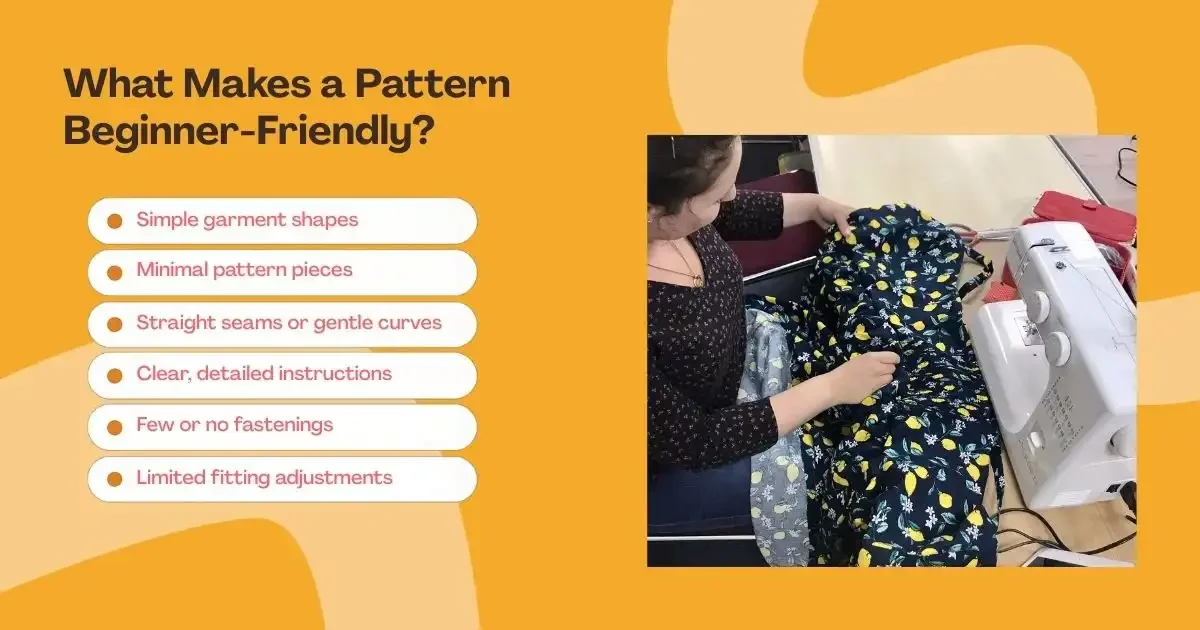
Beginner sewing patterns usually include:
Simple garment shapes
Minimal pattern pieces
Straight seams or gentle curves
Clear, detailed instructions
Few or no fastenings (zips, buttons, plackets)
Limited fitting adjustments
Examples of good beginner garments include:
Elastic-waist skirts or trousers
Simple tops or T-shirts
Shift dresses
Pyjama bottoms
Loose-fitting garments
These patterns allow you to focus on core skills like cutting fabric, sewing seams, pressing, and following instructions.
What to Avoid as a Beginner
When starting out, it’s best to avoid patterns that include:
Set-in sleeve
Fitted bodices
Invisible zips
Button plackets
Collars or lapels
Tailoring techniques
These techniques are valuable, but they’re much easier to learn once you’ve built confidence with simpler projects.
Moving Into Intermediate Sewing Patterns
Intermediate patterns are ideal when you’re comfortable using a sewing machine, understand basic construction, and want to develop new skills.
Signs You’re Ready for Intermediate Patterns
You may be ready for intermediate sewing patterns if:
You can follow pattern instructions without confusion
You’ve sewn several garments successfully
You’re comfortable unpicking and correcting mistakes
You understand basic garment construction
You want to improve fit and finish
What Intermediate Patterns Usually Include
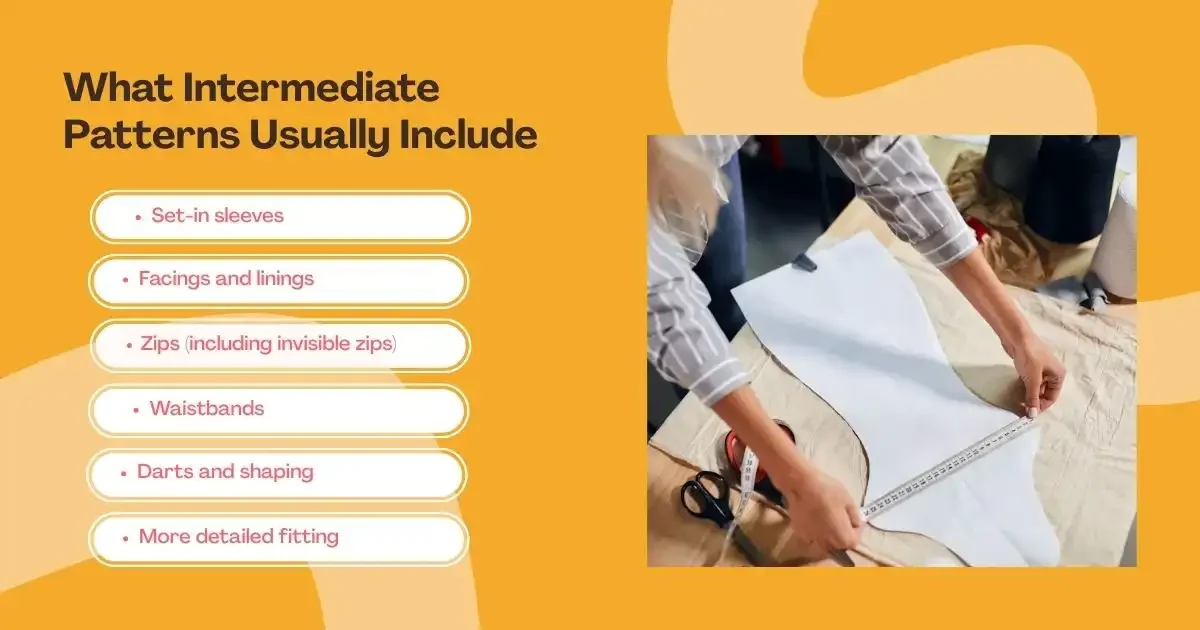
Intermediate patterns often introduce:
Set-in sleeves
Facings and linings
Zips (including invisible zips)
Waistbands
Darts and shaping
More detailed fitting
These patterns help you refine your skills and produce garments that feel more polished and professional. A good tip is to choose one new technique per project. That way, you’re learning without feeling overwhelmed.
Advanced Sewing Patterns: When to Take the Leap
Advanced patterns are best suited to sewists with strong foundational skills and experience across a range of garment types.
What Makes a Pattern Advanced?
Advanced sewing patterns may include:
Complex construction sequences
Tailoring techniques
Structured garments
Multiple fitting adjustments
Detailed pattern alterations
Fine fabrics that require precision
These projects often take longer and require patience, but they can be incredibly satisfying when approached at the right time.
If you’re considering an advanced pattern, ask yourself:
Do I understand the techniques involved?
Am I happy to take my time?
Am I prepared to practise on scrap fabric or a toile?
There’s no rush. Advanced patterns will still be there when you’re ready.
How to Read a Sewing Pattern Before You Buy It
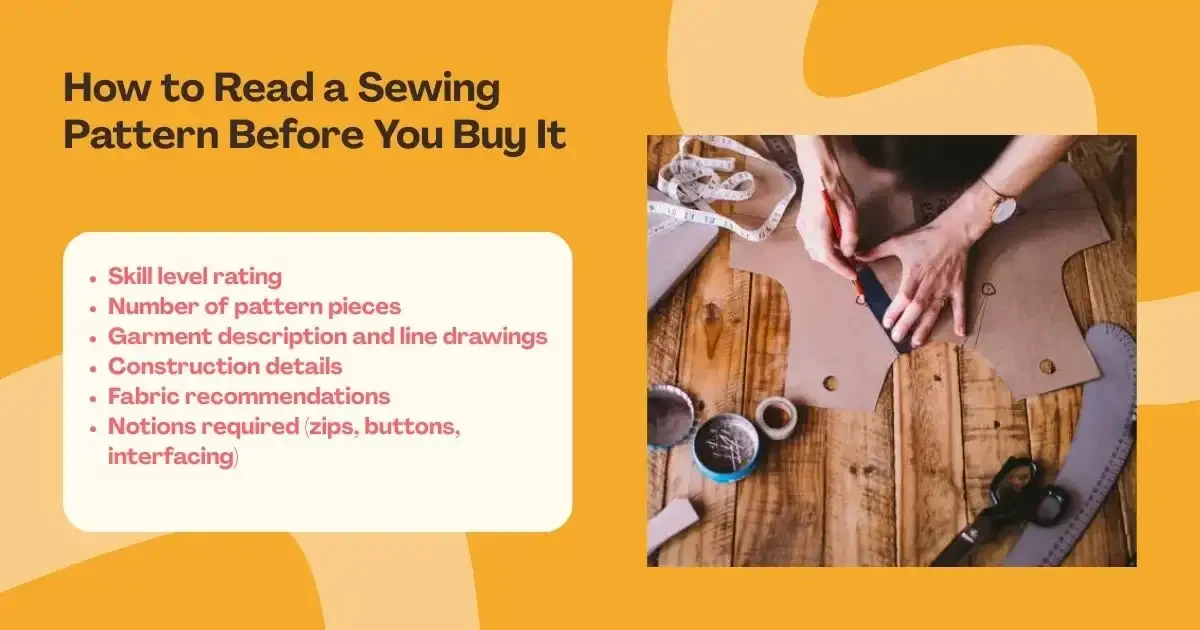
One of the most important steps in choosing the right sewing pattern is learning how to read the information provided on the envelope or product page.
Key Things to Look For:
Before committing to a pattern, check:
Skill level rating
Number of pattern pieces
Garment description and line drawings
Construction details
Fabric recommendations
Notions required (zips, buttons, interfacing)
Line drawings are especially helpful because they show the garment clearly without the distraction of fabric choice or styling. If the pattern includes multiple views, consider whether all views feel manageable—or whether one simpler option is best for now.
Matching Fabric Choice to Your Skill Level
Matching fabric choice to your skill level plays a huge role in how easy or difficult a sewing project feels. Even a beginner-friendly pattern can quickly become challenging if it’s paired with a fabric that’s hard to handle. If you’re still developing your skills, it’s best to choose stable, predictable fabrics such as woven cottons, cotton poplin, linen blends, lightweight denim, or ponte and other stable knits.
These fabrics are easier to cut, sew, and press, making the whole process more manageable and enjoyable. Slippery, very stretchy, or delicate fabrics are best avoided until you feel confident working with them. Choosing the right fabric can make a pattern feel far more achievable, help your finished garment turn out better, and significantly reduce frustration along the way.
Common Mistakes When Choosing Sewing Patterns
Many sewists experience frustration not because they lack ability, but because they chose the wrong pattern at the wrong time.
Common mistakes include:
Choosing based on appearance alone
Ignoring skill level information
Underestimating fabric difficulty
Attempting too many new techniques at once
Comparing yourself to others’ finished garments
Sewing is not a race. Progress looks different for everyone.
Progressing Your Sewing Skills with Confidence
Choosing the right sewing pattern is about setting yourself up for success, not holding yourself back. When you select patterns that suit your current skills while gently stretching them, each project becomes a positive learning experience. Confidence grows from finishing garments, understanding the process, and building on what you’ve learned—one well-chosen project at a time.
As you gain confidence choosing sewing patterns that suit your skill level, the right guidance can make progressing feel easier. At Cotton Club, support is available to help you continue developing your dressmaking skills. Our Sewing Courses offer clear instruction and practical learning to help you take on new patterns with confidence.
Frequently Asked Questions (FAQs)
What are the basic skills in sewing?
Basic sewing skills include learning essential stitches such as the running stitch and backstitch, along with understanding how to start and finish seams neatly. They also involve practical techniques like pinning fabric correctly, adjusting thread tension, choosing the right stitch length, and sewing accurately by hand or machine. Developing these core sewing skills makes it easier to follow good patterns and progress confidently through each sewing skill level.
What four factors should you consider when picking a pattern?
Four key factors to consider when picking a sewing pattern are your sewing level, how much time you have available, where you’ll be sewing, and the type of garment you want to make. Choosing patterns that match your sewing skill level helps ensure the project feels achievable and supports steady improvement.
What is the first thing to learn in sewing?
The first thing to learn in sewing is how to understand your tools and materials. Getting familiar with your sewing machine and learning how different fabrics behave gives you a strong foundation for developing sewing skills. Fabric knowledge grows over time, but starting with the basics makes it easier to follow good patterns and progress through different sewing levels with confidence.
What is the 180 rule in sewing?
The 180 rule in sewing refers to pressing or turning seam allowances consistently in one direction—usually towards the back or downwards—to improve comfort, fit, and the overall finish of a garment. Understanding simple construction rules like this becomes easier as your sewing skills develop, especially when supported by clear guidance or a sewing skills course.