Basic Sewing Terms Every Beginner Should Know
Basic sewing terms every beginner should know are the common words used for sewing tools, fabrics, and techniques. Understanding terms like seam, seam allowance, grain, bobbin, and hemming makes patterns easier to follow and helps beginners sew with more confidence.
Starting your sewing journey is exciting, but it can also feel overwhelming. One of the biggest challenges for beginners isn’t threading a machine or sewing a straight line — it’s understanding the language of sewing. Patterns, tutorials, and sewing guides are full of terms that can sound confusing if you’re new to the craft.
Learning basic sewing terminology gives you confidence. It helps you follow instructions more easily, understand patterns without frustration, and enjoy the process rather than feeling stuck. This guide breaks down the most common sewing terms every beginner should know, explained simply and clearly.
Why Learning Sewing Terms Matters
Sewing has its own vocabulary, just like any other skill. Understanding these sewing words allows you to:
Read sewing patterns with confidence
Follow tutorials without stopping every few minutes
Communicate more easily with other sewists
Avoid common beginner mistakes
Feel more relaxed and capable while sewing
Once you understand the language, sewing becomes much more enjoyable.
Essential Sewing Tools and Equipment Terms
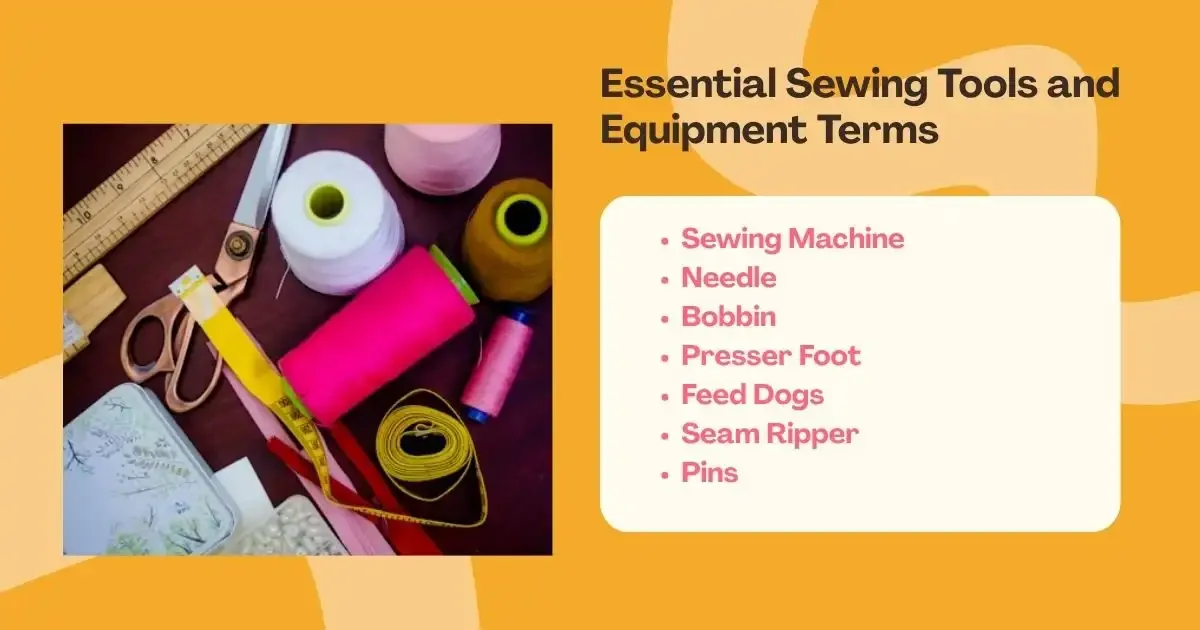
Before you even begin stitching, it helps to understand the names of the tools you’ll use most often. Here are some basic tools for sewing:
Sewing Machine: A sewing machine is used to stitch fabric together quickly and evenly. Most beginner machines create a straight stitch and a zigzag stitch, which are enough for many projects.
Needle: A needle is the pointed tool that carries the thread through the fabric. Sewing machine needles and hand sewing needles come in different sizes depending on the fabric you’re using.
Bobbin: The bobbin is a small spool that holds the lower thread in a sewing machine. The top thread and bobbin thread work together to form stitches.
Presser Foot: The presser foot holds the fabric flat against the machine while you sew. Different presser feet are designed for specific tasks, such as zips or buttonholes.
Feed Dogs: Feed dogs are the small metal teeth beneath the presser foot. They gently move the fabric through the machine as you sew.
Seam Ripper: A seam ripper is a small tool used to remove stitches. Every sewist needs one — mistakes are part of learning!
Pins: Pins temporarily hold fabric pieces together before stitching. They help keep everything aligned.
Common Fabric and Material Terms
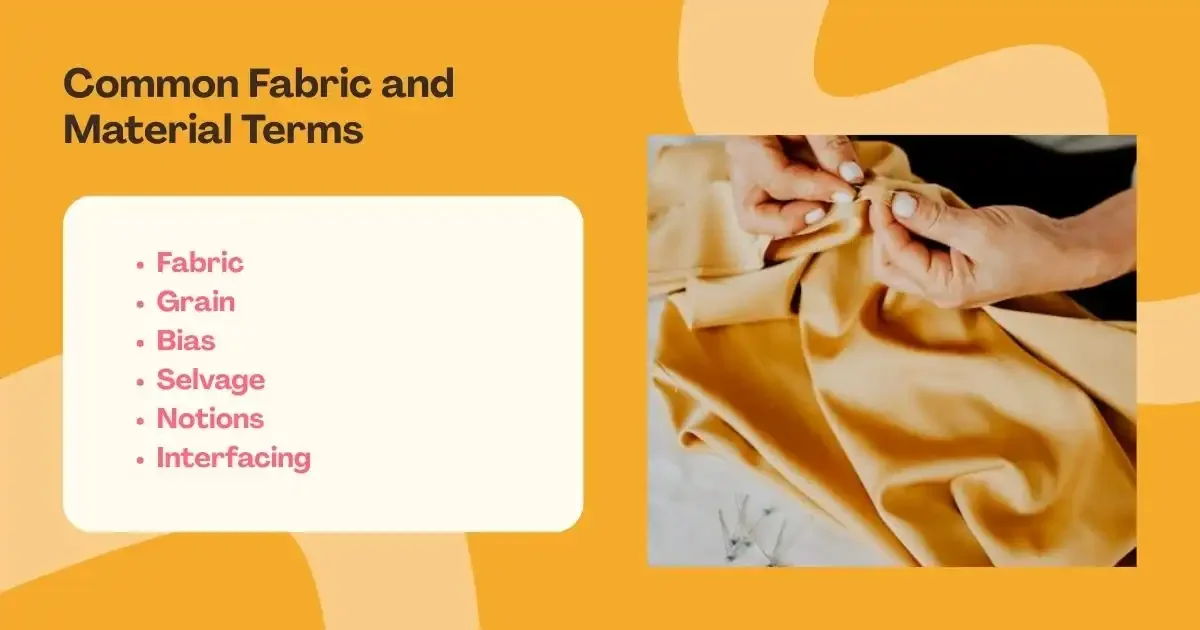
Understanding fabric-related terms will help you choose the right materials and follow pattern instructions correctly.
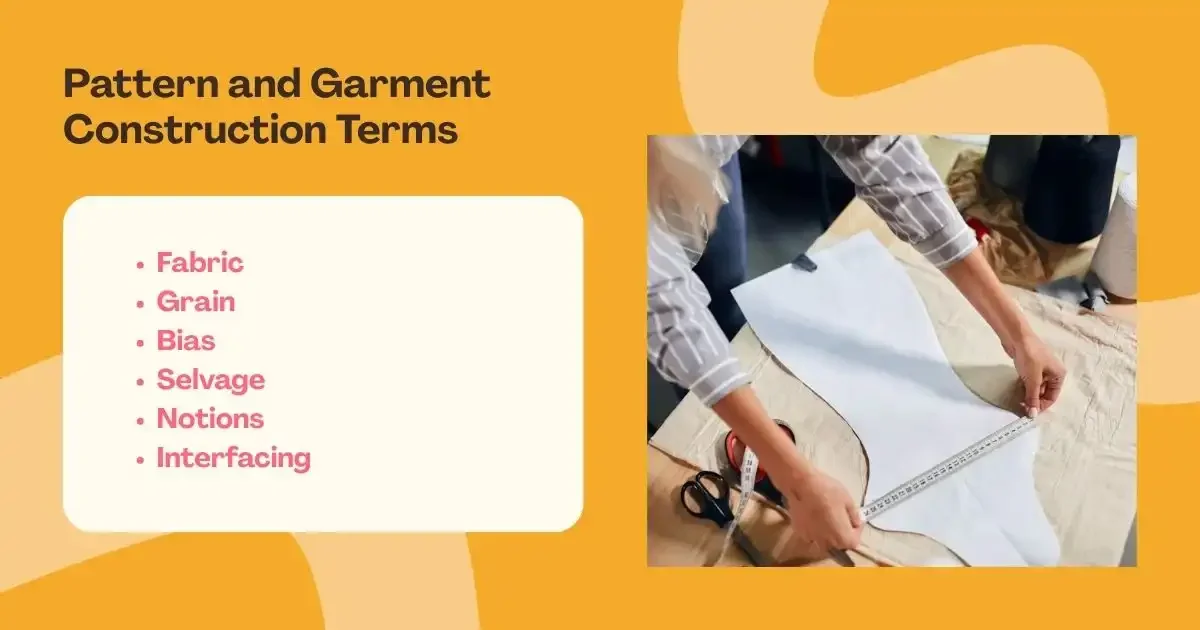
Fabric: Fabric is the material used to make clothing or other sewn items. Common beginner-friendly fabrics include cotton and linen.
Grain: The grain refers to the direction of threads in a fabric. Sewing along the correct grain helps garments hang and fit properly.
Bias: Bias is the diagonal direction of the fabric. Fabric cut on the bias stretches more and drapes differently.
Selvage: The selvage is the finished edge of the fabric that runs along the length of the cloth. It doesn’t fray and is usually trimmed away before sewing.
Notions: Notions are small sewing supplies such as buttons, zips, thread, elastic, and interfacing.
Interfacing: Interfacing is a supportive material added to certain areas of a garment, such as collars or waistbands, to give structure.
Basic Stitching and Sewing Terms
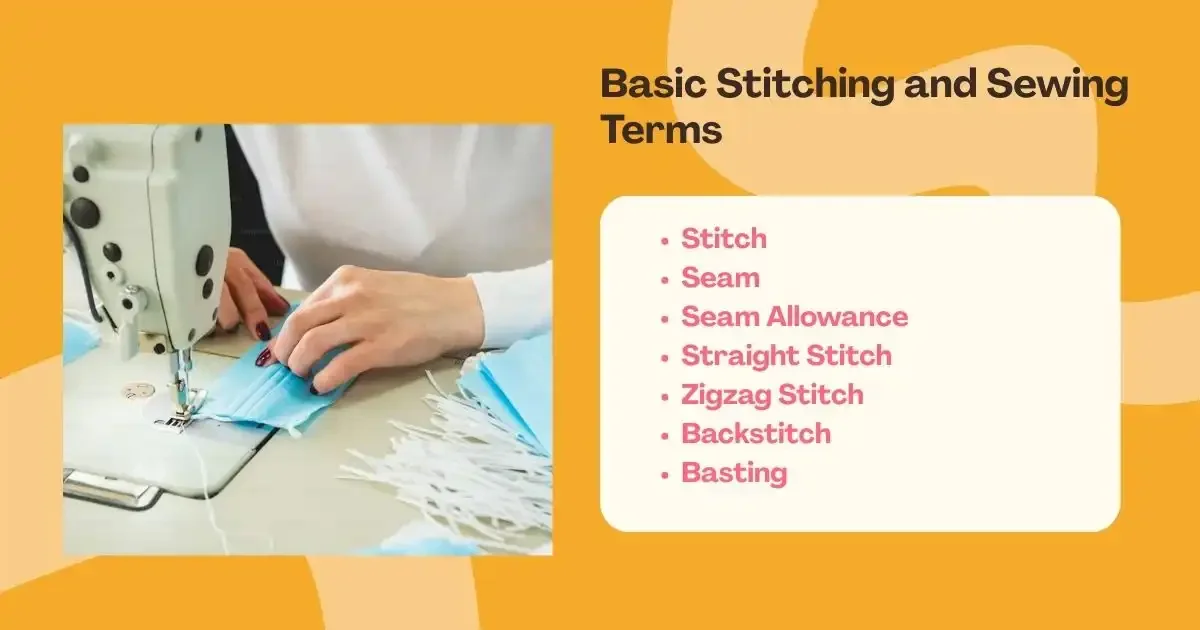
These terms describe how fabric pieces are joined together.
Stitch: A stitch is a single loop of thread formed by the needle and bobbin. Multiple stitches create a seam.
Seam: A seam is the line of stitching that joins two pieces of fabric together.
Seam Allowance: Seam allowance is the space between the stitching line and the edge of the fabric. Patterns usually specify how wide this should be.
Straight Stitch: The straight stitch is the most basic stitch used in sewing. It’s used for seams and construction.
Zigzag Stitch: A zigzag stitch moves side to side and is often used to prevent fabric edges from fraying.
Backstitch: Backstitching means sewing a few stitches backwards at the beginning or end of a seam to secure it.
Basting: Basting is temporary stitching used to hold fabric in place before permanent sewing. It can be done by hand or machine.
Pattern and Garment Construction Terms
Sewing patterns use specific language to guide you through making a garment.
Sewing Pattern: A sewing pattern is a set of instructions and templates used to create a garment or project.
Pattern Pieces: Pattern pieces are individual shapes cut from fabric that are sewn together to form a finished item.
Notches: Notches are small marks on pattern pieces that help you line up fabric sections correctly.
Right Side and Wrong Side: The right side of the fabric is the side meant to be seen on the outside of the garment. The wrong side is the inside.
Facing: Facing is a piece of fabric used to finish raw edges around necklines or armholes.
Casing: A casing is a fabric tunnel that holds elastic or a drawstring.
Finishing and Edge-Related Terms
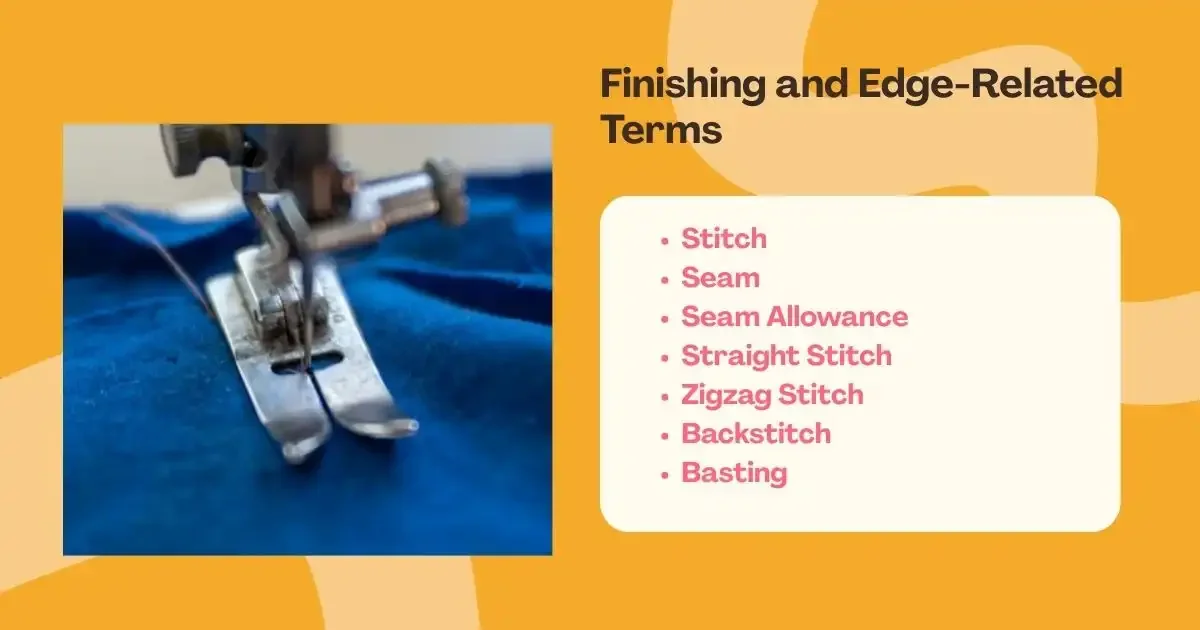
Finishing techniques help your sewing look neat and last longer.
Hem: A hem is the folded and stitched edge at the bottom of a garment, such as a skirt or trousers.
Hemming: Hemming is the process of finishing a raw edge by folding it and sewing it in place.
Overlocking: Overlocking is a method of stitching that trims and finishes raw edges at the same time. This is often done with a special machine.
Raw Edge: A raw edge is an unfinished fabric edge that can fray if not secured.
Topstitching: Topstitching is visible stitching sewn on the outside of a garment for decoration or strength.
Measuring and Fitting Terms
Accurate measuring is an important part of sewing.
Measuring Tape: A flexible tape used to take body and fabric measurements.
Ease: Ease refers to the extra space in a garment that allows movement and comfort.
Fit: Fit describes how a garment sits on the body.
Alterations: Alterations are changes made to a garment or pattern to improve fit.
Hand Sewing Terms Beginners Should Know
Even if you use a sewing machine, hand sewing is still useful.
Running Stitch: A simple hand stitch used for basting or gathering fabric.
Slip Stitch: A nearly invisible hand stitch often used for hemming.
Knot: A knot secures the end of a thread so it doesn’t pull through the fabric.
Helpful Sewing Habits and Terms
These everyday sewing concepts make projects smoother and more enjoyable.
Pressing: Pressing means lifting and placing the iron rather than sliding it. This helps keep fabric shape accurate.
Ironing: Ironing involves moving the iron back and forth to remove wrinkles before sewing.
Test Stitch: A test stitch is sewn on scrap fabric to check tension, stitch length, and thread colour before sewing your project.
Tension: Tension refers to how tight or loose the stitches are. Balanced tension creates neat, even stitches.
Tips for Remembering Sewing Terms
Keep a small sewing glossary nearby
Practise using the terms while sewing
Watch tutorials and listen on the language used
Don’t rush — learning takes time
The more you sew, the more familiar these words will become.
The Foundations of Confident Sewing
Learning basic sewing terms isn’t about memorising everything at once, but about building confidence over time. As these words become familiar, patterns feel clearer, instructions easier to follow, and mistakes less frustrating. With patience and practice, the language of sewing will soon feel natural — helping you enjoy the creative process and grow with every project.
As your sewing confidence grows, having the right support makes learning easier. Cotton Club offers friendly, step-by-step sewing courses with clear guidance, practical projects, and a supportive community to help you progress at your own pace. Find out more about our Sewing Courses and choose a course that suits you, continuing to build your sewing skills with confidence.
Frequently Asked Questions (FAQs)
How long does it take to become familiar with sewing terms?
Most beginners start recognising common sewing terms within a few projects. You don’t need to understand everything straight away — repeated use through patterns, tutorials, and practice helps the language of sewing become familiar naturally over time.
Do sewing terms differ between countries or patterns?
Some sewing terms can vary slightly between UK and US patterns, particularly measurements and wording. For example, seam allowances may be included in some patterns and not others. Checking the pattern instructions carefully helps avoid confusion.
What sewing terms should beginners focus on first?
Beginners benefit most from learning terms related to tools, seams, fabric direction, and basic stitches. These appear most often in patterns and instructions and form the foundation for understanding more advanced techniques later on.
Is it normal to forget sewing terms while learning?
Yes — forgetting or mixing up sewing terms is completely normal when starting out. Many sewists keep a small glossary or notes nearby and refer back to them as needed. Confidence builds through use, not memorisation.