

Best Fabric for Beginner Sewing
Starting to sew is exciting, but for many beginners, the most confusing part can be choosing the right fabric. With so many types, textures, and weights available, it’s easy to feel overwhelmed. Picking the wrong fabric can make sewing frustrating and even discourage beginners from continuing.
That’s why understanding which fabrics are ideal for beginner sewing is essential. The right material can make learning enjoyable, build confidence, and set the foundation for more complex projects. We’ll explore the best fabrics for beginner sewing, fabrics you should avoid, and beginner-friendly projects.
Why Fabric Choice Matters for Beginners?
The type of fabric you choose has a huge impact on your sewing experience. Beginners often make the mistake of selecting fabrics that are too slippery, stretchy, or delicate. These fabrics can be tricky to cut, pin, and sew, which leads to frustration.
Fabrics that are forgiving, easy to handle, and stable are far more suitable for someone learning the basics. Using the right fabric allows beginners to focus on mastering essential skills, such as:
Sewing straight seams
Understanding tension on a machine
Cutting accurately
Handling different textures
Starting with the wrong material can lead to crooked seams, puckered edges, and disappointment. Choosing the right fabric makes the learning curve much smoother.
What Makes a Fabric Beginner Friendly
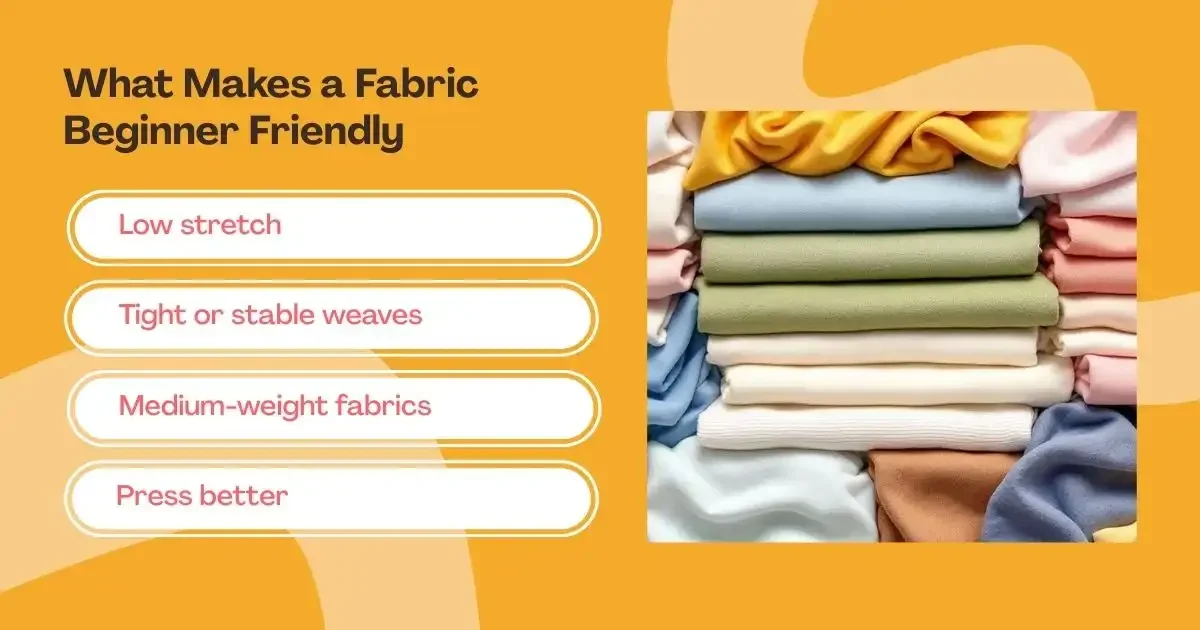
Before looking at specific fabric types, it helps to understand the qualities that make a fabric suitable for beginners. First, low stretch is key. Fabrics that do not stretch are easier to cut accurately and stitch neatly. They stay aligned and reduce the risk of wavy seams.
Second, tight or stable weaves hold their shape. Loose or slippery weaves shift easily and are harder to control. Third, medium-weight fabrics are ideal. Very lightweight fabrics can bunch and drift, while very heavy fabrics can strain your machine and hands. Finally, natural fibres such as cotton and linen tend to press better and behave more predictably than synthetics, making them ideal for learning.
Best Fabrics for Beginner Sewing
Here are the best fabrics for beginner sewers to practice sewing:
1. Cotton: The Best Place to Start
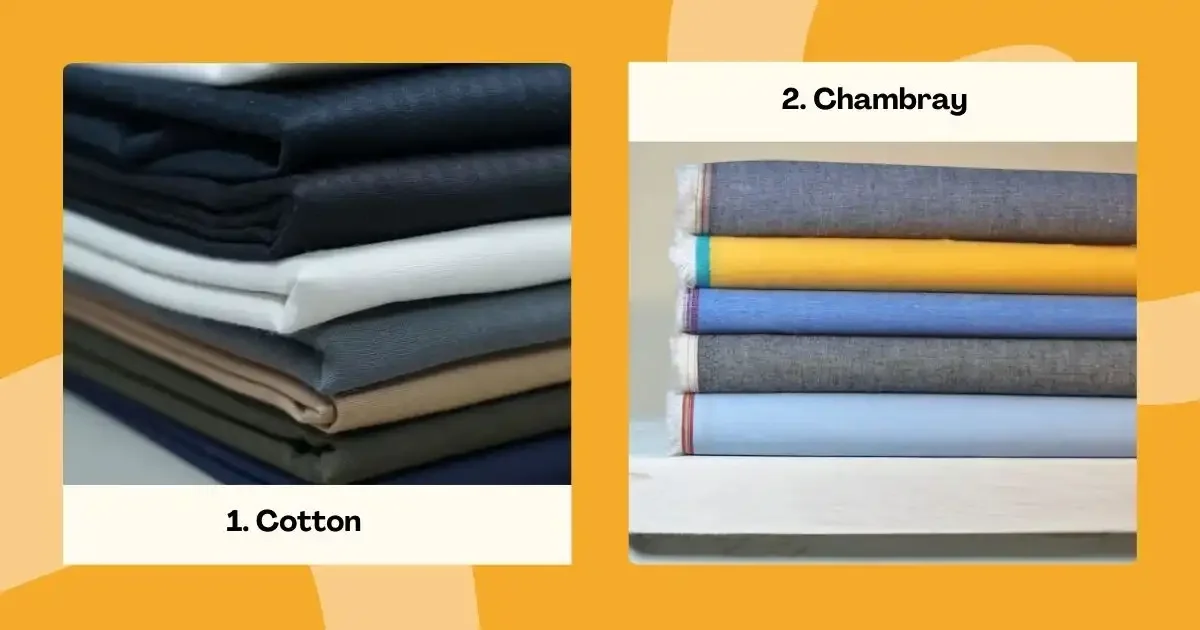
Cotton is widely regarded as the best fabric for beginner sewing, and for good reason. It is stable, easy to cut, presses beautifully and works well with basic sewing equipment. Quilting cotton is particularly popular for beginners. It has a crisp feel that makes cutting and stitching straightforward, and it comes in countless prints and colours.
Cotton poplin is another excellent option, offering a slightly smoother finish while remaining easy to handle. Cotton lawn and voile are lighter versions that still behave well if handled carefully. These fabrics are ideal once you feel confident sewing straight seams and controlling lighter materials. Cotton is perfect for first projects such as tote bags, cushion covers, simple skirts and tops. It allows beginners to focus on technique rather than fighting the fabric.
2. Chambray: A Gentle Step Towards Denim
Chambray looks similar to denim but is much lighter and easier to sew. It offers a casual, modern finish without the thickness that can challenge beginners. Because chambray is tightly woven and stable, it cuts cleanly and sews smoothly on a standard sewing machine.
It works well for shirts, relaxed dresses, skirts and children’s clothing. For beginners who like structured garments but are not ready for heavyweight fabrics, chambray provides a confident next step.
3. Flannel: Soft, Forgiving and Confidence Building
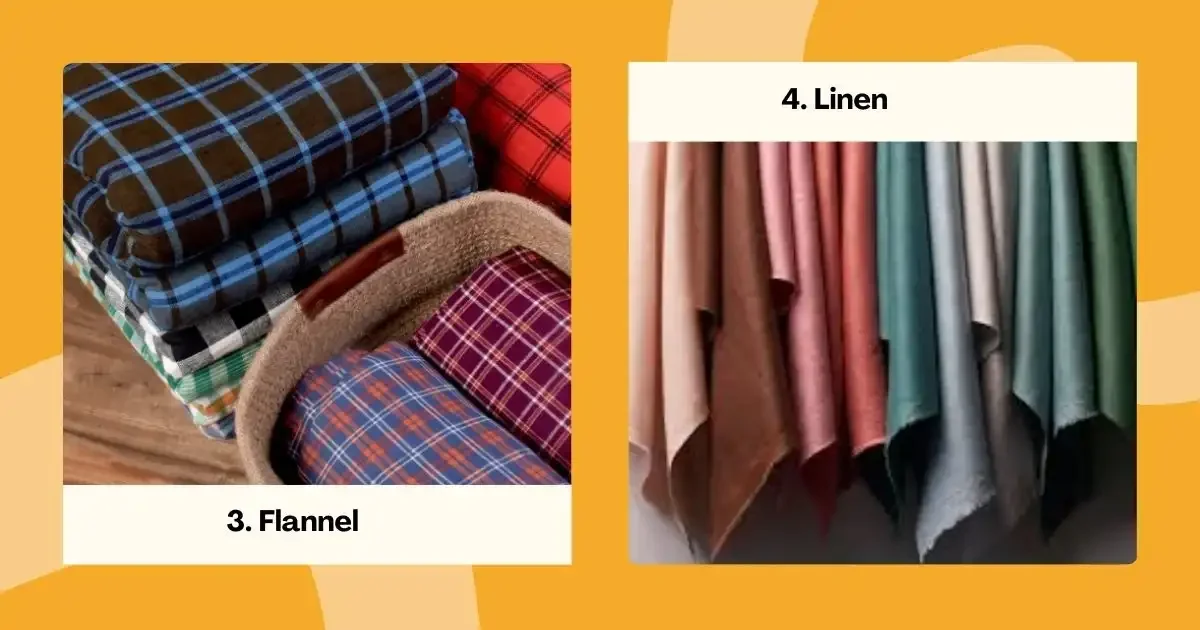
Flannel is an excellent choice for beginner sewing because it is soft, slightly fuzzy and very forgiving. Its texture hides minor stitching imperfections, which helps new sewists feel more relaxed about mistakes. Flannel is also stable and easy to pin, making it suitable for garments and home projects alike.
Pyjamas, lounge trousers, baby blankets and casual shirts are all great beginner projects for flannel. Because flannel feels cosy and approachable, it often encourages beginners to sew more frequently and experiment with new patterns.
4. Linen and Linen Blends
Linen has a reputation for being difficult, but medium-weight linen and linen blends are surprisingly beginner-friendly. These fabrics are breathable, natural and respond well to pressing. Pure linen wrinkles easily, which can be frustrating at first.
Linen blends reduce this issue while maintaining the fabric’s structure and comfort. They are ideal for summer garments such as tunics, loose trousers and simple dresses. For beginners who want to sew wearable pieces that feel elevated yet manageable, linen blends strike an excellent balance.
5. Stable Knits for Confident Progression
While knits are often avoided by beginners, some knit fabrics are much easier to work with than others. Stable knits such as interlock or double knit have less stretch and more structure than lightweight jersey. These fabrics allow beginners to practise sewing stretchy garments without dealing with excessive distortion.
They are suitable for simple tops, skirts and comfortable everyday wear. Using a ballpoint needle and practising on scraps helps beginners transition smoothly into knit sewing without frustration.
Fabrics Beginners Should Avoid Initially
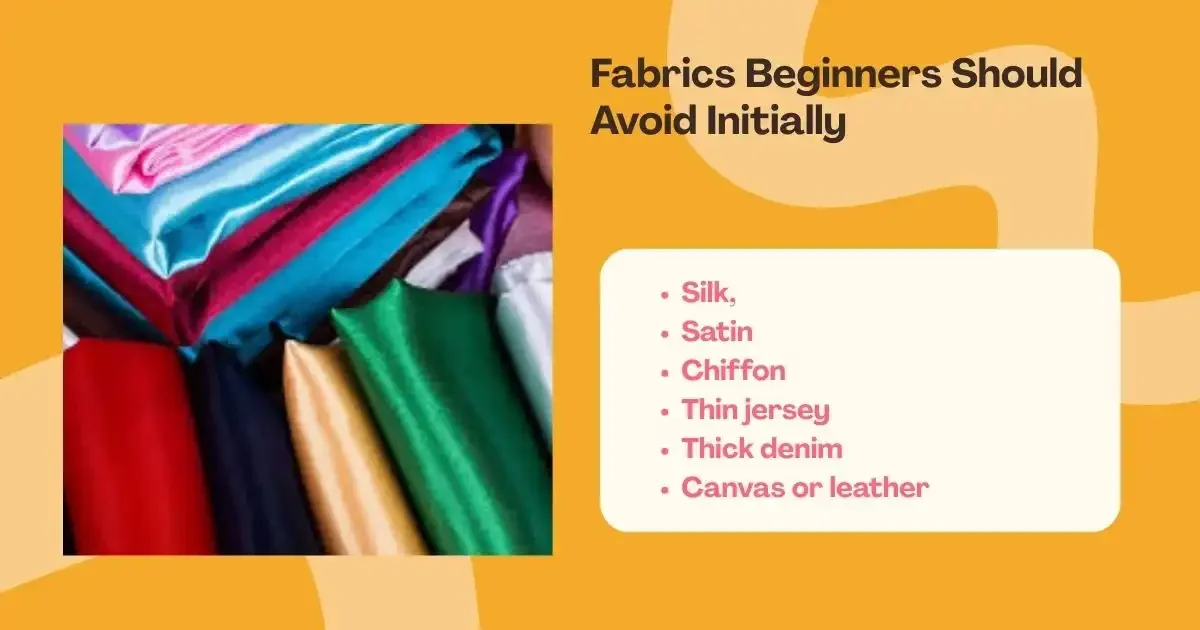
Some fabrics are best saved for later in your sewing journey. Slippery materials like silk, satin and chiffon move constantly under the needle and require advanced handling techniques. Highly stretchy fabrics such as thin jersey or rib knit can stretch out of shape during sewing if tension and feeding are not controlled properly.
Very heavy fabrics like thick denim, canvas or leather can strain domestic sewing machines and cause needle breakage. While these fabrics are rewarding to work with later, they are better tackled once confidence and technique improve. Avoiding these materials early on helps beginners stay motivated and focused on learning fundamentals.
Matching Fabric to Beginner-Friendly Projects
Choosing the right fabric is only part of the equation. Pairing it with an appropriate project makes learning faster and more enjoyable.
Cotton fabrics work well for tote bags, cushion covers, aprons and simple skirts. These projects teach straight seams, seam allowances and basic construction.
Flannel and chambray are excellent for pyjamas, casual shirts and children’s clothing. They introduce garment shaping without excessive complexity.
Linen blends suit relaxed garments with minimal structure, allowing beginners to practise pressing and finishing seams neatly.
Stable knits are ideal for beginner stretch projects such as simple tops or elastic waist skirts.
Turn Beginner Fabrics into Real Creations
Starting with the right fabric helps remove much of the frustration from learning to sew, especially when beginners repeat small projects using the same material to build confidence and control. Simple habits like prewashing, pressing, and testing stitches on scraps can greatly improve results. Sewing skills grow through consistency, and beginner-friendly fabrics create a supportive learning environment where progress feels achievable rather than overwhelming.
If you’re ready to put this into practice, learning with guidance makes a real difference. At Cotton Club, beginners get hands-on support, clear instruction, and the chance to work with the right fabrics from day one, so progress feels steady, and confidence builds naturally. Browse their Sewing Courses and take the next step from learning fabrics to actually sewing with confidence
FAQs
What are the materials for sewing?
Sewing materials include essential tools such as scissors, needles, pins, thread, and a seam ripper, along with measuring tools like tape measures, rulers, and chalk for accuracy. Other materials include fabric, interfacing, buttons, and zippers for constructing garments. These are often used alongside a sewing machine, iron, and cutting mat for projects ranging from simple mending to full dressmaking.
What is easiest fabric to sew?
The simplest fabrics for beginners are stable, non-stretch woven materials such as cotton—like quilting cotton, poplin, or lawn, and linen. These fabrics are easy to cut, pin, and handle without slipping, making them ideal for practising basic sewing skills. Flannel is another beginner-friendly choice due to its soft, forgiving texture, while Ponte knit combines the stability of a woven with a little stretch, making it easy to work with as you gain confidence.
What are some easy sewing projects for clothes?
Beginner-friendly clothing projects often include simple elastic-waist pieces such as drawstring pants, pajama shorts, or gathered skirts, as well as versatile tops like basic tunics or infinity scarves. Using stable fabrics like cotton or linen makes these projects easier to handle and perfect for practising essential sewing skills. If you want hands-on guidance, check out the Monday After-School Sewing Class to build skills in a supportive environment.
What are easy sewing patterns for beginners?
For things to sew for beginners, start with simple home items like pillowcases, tote bags, or fabric baskets, then try easy clothing such as elastic-waist skirts, pajama pants, or basic T-shirts. Key beginner projects help build confidence with techniques like straight seams, elastic casings, and simple hems.